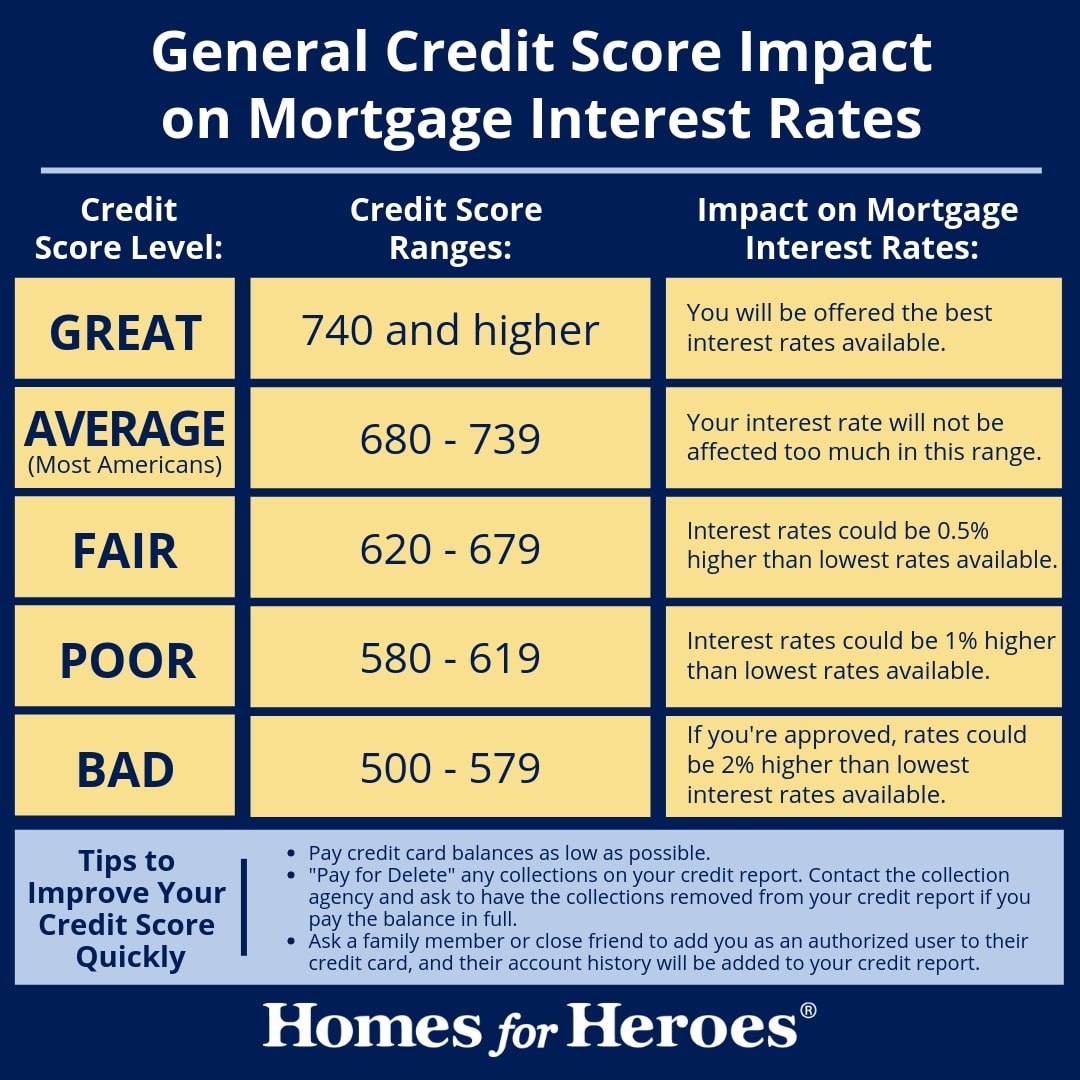
Not putting 20% down can lead to more than having to pay regular monthly PMI. It could impact the interest rate on your mortgage, according to the CFPB. Some lending institutions reward customers for higher down payments in the type of a lower interest rate. Home loan lenders typically utilize risk-based pricing when figuring out the interest rate on a loan.
Less danger, a lower rate. If you offer more than a 20% down payment it sends out a signal you can pay for the home mortgage and therefore are less most likely to default, leaving the loan provider on the hook with the property. That can be a huge conserving, given you are likely to pay your home loan for 3 decades.
25% in interest can have a significant effect over the years. When it pertains to identifying how much deposit you prepare to provide up, your money circulation and savings are going to determine a great deal of the decision making. Twenty percent down is the way to avoid PMI. If you can't collect that much of a down payment, a smaller sized deposit can indicate the difference between homeownership and renting.
Some first-time purchasers go through a bit of sticker shock when they become property owners, confronted with greater regular monthly costs and the need to keep or fix their brand-new home. To avoid that, some go with a lower down payment. For home buyers who are in the position to put the 20% down, it still might not make good sense if they are utilizing money that is earning interest in a financial investment or cost savings account.
They will not lose the positive advantages of compounding either, which takes place when the incomes from an investment are reinvested. On the other hand, that 20% down payment might be required if you are going shopping in a highly searched for area. With cost wars still breaking out in pockets of the U.S.

After all, nobody wants to concur to a sale rate only to learn the prospective buyer isn't eligible for the home mortgage. A large down payment signifies strength and commitment to the sale procedure. A 20% down payment has actually long been the standard when it comes to home loans but countless individuals are putting down a lot less.
The Single Strategy To Use For Who Took Over Washington Mutual Mortgages
Michelle Lerner House Purchasing As SmartAsset's home purchasing specialist, award-winning author Michele Lerner brings more than twenty years of experience in genuine estate. Michele is the author of 2 books about house purchasing: "HOMEBUYING: Tough Times, Very First Time, Whenever," released by Capitol Books, and "New Home 101: Your Guide to Purchasing and Building a New Home." Michele's work has appeared in The Washington Post, Realtor.
She is enthusiastic about helping purchasers through the procedure of becoming homeowners. The National Association of Realty Editors (NAREE) honored Michele in 2016 and 2017 with the award for Best Home loan or Monetary Realty Story in a Daily Newspaper.
Numerous property buyers have a tough time managing daily expenses while conserving for a down payment or closing costs. Lease, utilities, cars and truck payments, student loans, and credit cards, not to mention groceries, can often drain your bank account as quickly as cash is transferred. Thinking about all of that, it's not a surprise that saving for a home is among the biggest hurdles to really buying a house.
Today's purchasers have home mortgage alternatives that need deposits well below 20% of the house's purchase rate. In numerous cases you can buy a house with simply 3% down. There are likewise buyer assistance programs that may assist cover your down payment and potentially closing expenses. Financing from those programs frequently can be combined with monetary presents from your friends and family to minimize your out-of-pocket expenses to buy a house.
If you're great at handling your credit and meet specific requirements, this could be the option for you. A mortgage loan provider can supply the specifics, evaluate your monetary situation, and determine eligibility. However prior to you get in touch with a lender, consider these initial requirements: A minimum of https://penzu.com/p/e3a74008 someone on the loan must be a novice homebuyer.
Or, if you're buying the home with somebody else, at least one of you hasn't owned a house in the past three years.) The home being funded must be a one-unit home (including townhomes, condominiums, co-ops, and PUDs) and not a manufactured home (what are the interest rates on reverse mortgages). You prepare to inhabit the house as your main residence; and The mortgage must have a fixed rate (adjustable rate mortgages [ARMs] are not qualified for the 3% down payment home loan).
What Was The Impact Of Subprime Mortgages On The Economy - Truths
The minimum deposit needed might depend upon the type of home loan and the loan wyndham timeshare las vegas provider. You just need to down payment of 3. 5% for FHA loans, which are guaranteed by the Federal Real Estate Administration. VA loans and USDA loans do not need any down payment at all. Lenders might accept as low as 3% for standard loans, while jumbo loans loans higher than the conforming loan limitations set by Fannie and Freddie Mac may require a bigger down payment, provided the size of the loan.
You can see today's home mortgage rates here. Making a larger deposit implies securing a smaller sized loan, which eventually indicates you'll spend less in home mortgage payments gradually. Look at the chart listed below to see just how much you 'd pay monthly and in total with three different down payment percentages.
65% APY. Down payment5% down10% down20% downMortgage quantity$ 380,000$ 360,000$ 320,000 Monthly mortgage payment$ 1,740$ 1,647$ 1,464 Total interest paid$ 245,800$ 233,860$ 206,990 Total mortgage cost$ 624,066$ 591,221$ 525,539 We got these numbers with our home loan calculator, which you can use to see how much house you can afford. The more cash you have actually paid toward the home, the more equity you'll have in your house.
Just how much home equity you have is a mix of your loan-to-value ratio, or LTV, and the home's worth after appraisal. After paying your home loan for a while, if your house equity is Go to the website 30%, then your loan-to-value ratio is 70%. Personal home loan insurance (PMI) is insurance coverage for the mortgage loan provider.
Borrowers of traditional loans who make a deposit of less than 20% are generally needed to pay PMI. Home loan insurance premiums are computed as portion of your general loan amount, and are typically added to your regular monthly payments. You can stop paying these insurance coverage premiums as soon as you reach 20% equity or an LTV of less than 80%.
Home mortgage insurance isn't that pricey, particularly if your credit report is high. For many individuals it still makes good sense to take out a home loan and pay home mortgage insurance instead of not get a home since they couldn't make a 20% deposit. Home mortgage insurance coverage for FHA loans works differently. Learn more about it and personal home mortgage insurance coverage here.
A Biased View of What Are Reverse Mortgages And How Do They Work
Nevertheless, state and local governments along with non-profit companies use loan assistance programs for very first time buyers to help reduce these expenses. All loan programs vary: some may use down payment assistance in the type of a grant, while others may merely use a loan (albeit one with lenient terms) that you 'd still have to pay back.
If you don't receive loan support, you can get monetary gift from someone like a relative to assist you with the loan deposit.